


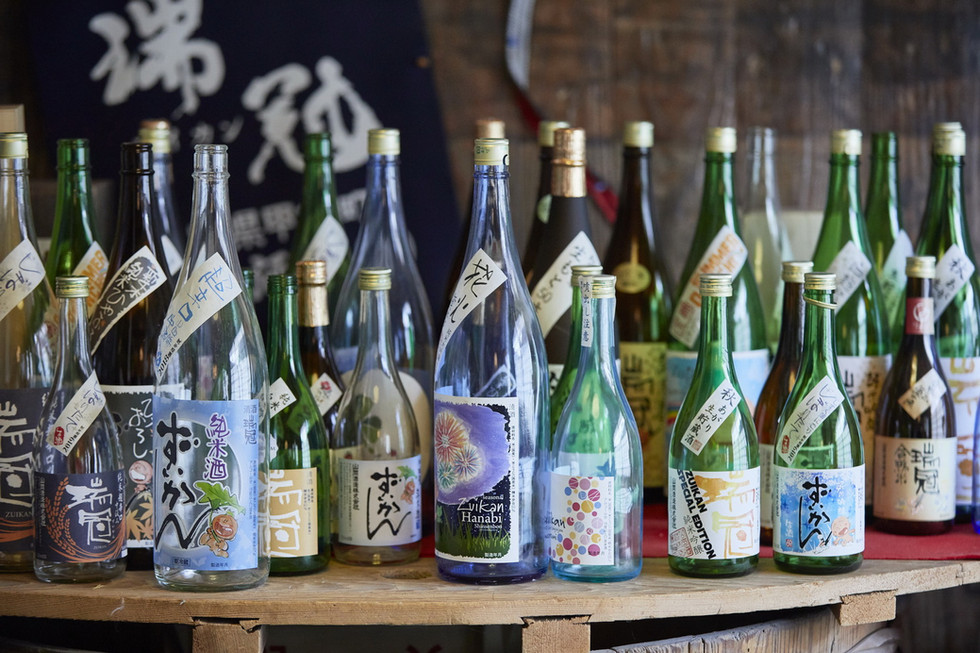
Here is a schematic overview to begin with:
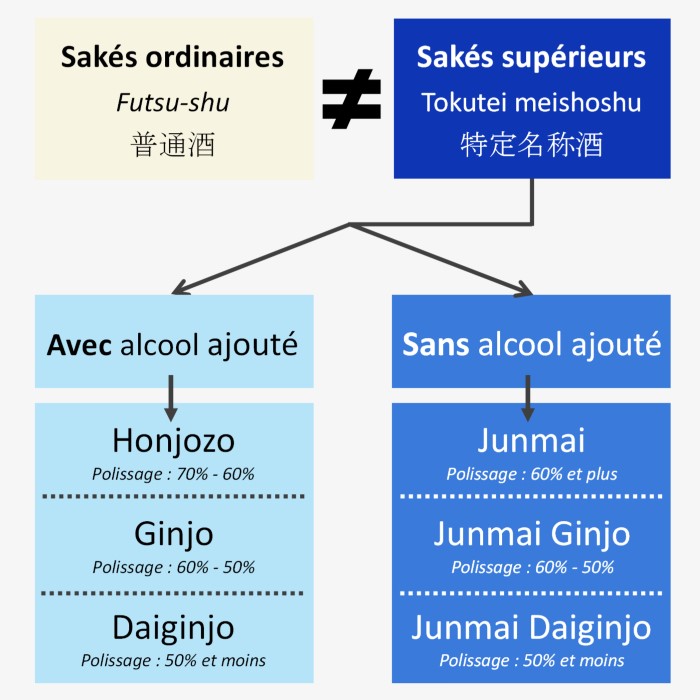
At the very top of the classification scale, there are two main categories of sake:
Ordinary sake accounts for more than half of Japan’s production. These are inexpensive sakes produced mechanically in large quantities. The rice polishing ratio is unrestricted (see the Sake Production page), and the addition of flavorings, colorings, sugars, or other additives is permitted. However, some of these Futsushu stand out, offering a more affordable introduction to sake.
“Superior” or “premium” sakes, on the other hand, must adhere to numerous rules that guarantee their quality and authenticity. Water, rice, yeast, koji (a microscopic fungus), and, more rarely, a small amount of distilled alcohol are the only permitted ingredients. Most of the sakes you’ll find on Wewantsake belong to this category.
“Superior” sakes are classified into several subcategories, which tell us more about their quality:
Adding distilled alcohol to sake is an age-old practice that allowed for better preservation of the liquid over time. During the rationing of World War II and the years that followed, sake was cut with pure alcohol to artificially increase production. Nowadays, these “honjozo” contain a maximum of 10% alcohol, often distilled from sugarcane. They sometimes receive a bad rap, but nowadays, many high-quality honjozo are available.
Contrary to what one might think, these sakes are light, delicate, and easy to drink. Their often attractive prices allow you to enjoy sake without spending too much.
Alcohol-free sake, on the other hand, is literally “pure rice,” meaning its alcohol content comes solely from the fermentation of the rice. These are the sakes commonly considered the most authentic. Alcohol-free sake is richer, more refined, and more complex than sake with added alcohol. Its higher acidity also allows it to perfectly complement the dishes served during a meal.
One final element is important for differentiating the various sakes in the premium category, whether with or without added alcohol: the polishing ratio.

The degree of rice polishing is a crucial factor that plays a very important role in sake fermentation (see the Sake Production page). Generally speaking, the more polished the rice grain, the finer, more subtle, and more complex the sake will be. To guide the consumer, the two main categories we just explained (with and without added alcohol) are themselves divided into subcategories based on the degree of polishing. See our diagram at the top of the page for more details.
A high polishing ratio doesn’t necessarily mean the sake will automatically be better. For example, there are excellent Junmai (slightly polished rice) sakes, just as there are mediocre Junmai Daiginjō (highly polished rice) sakes; it’s a matter of taste!
Note: the percentage we are referring to indicates the residual rate. 60% means, for example, that 60% of the original rice grain remains, and that therefore 40% has been removed by polishing: the lower the percentage, the higher the polishing rate.
Special categories
In addition to these broad categories, there are further categories that inform the consumer about specific types of sake or production methods. Here are a few examples:
Muroka
Unclarified sake. Most sakes are filtered through activated charcoal, which clarifies them. Muroka sakes do not undergo this process, and therefore retain a more rustic taste with more pronounced rice flavors.
Nigori
Cloudy sake Once fermentation is complete, the sake is pressed to separate the liquid from the remaining solids. Nigori sake, on the other hand, is only coarsely filtered to retain some of the lees (the undissolved rice particles). Sometimes, more lees are added after the initial filtration. These are very special sakes: thick, creamy, and with a lactic appearance.
Genshu
Undiluted sake. After fermentation, the pressed liquid has an alcohol content of nearly 20%, which often makes it difficult to appreciate the full subtlety of the sake’s aromas and flavors. Therefore, the brewer dilutes it with spring water to achieve a lower alcohol content. Genshu sakes are not diluted, which is why they often have a full body with pronounced flavors. They can sometimes be diluted at home with a little water.
Kijôshu
“Noble brew” sake. At the beginning of fermentation, the ingredients, including rice and water, are added in several stages to control the process. For Kijōshu, sake is added instead of water during the final addition. It is therefore a “sake with sake.” Kijōshu are smooth and mellow. They are rare sakes that are often aged for several years.
Koshu
Aged sake Unlike wine, sake is mostly consumed young these days. Aged sake, very common over a century ago, has, however, begun to regain its prestige in recent years. Maturation brings a velvety texture and toasty almond flavors that are not present in young sake. There is no precise legislation, but sake is generally considered aged after three years. The vintage is often indicated in this case.
Happoshu
Sparkling sake Yes, they exist! Most Happoshu are made by adding gas. These sakes are excellent substitutes for sparkling wines or champagnes for toasting before dinner or dessert. The “Bi-happoshu” category refers to Happoshu that are very lightly sparkling.
Find more information about special categories in our glossary!

